We’re heading back to Puro Pirineo. And by now, we could probably skip the introductions.
TransNomad has been coming and going through this territory for years, carrying bikes over its mountain passes, searching for new high-altitude lines and putting in plenty of hours on trails that remain long after we’ve packed up the paddock and gone home.
This year, we’ll be back to enjoy it on our journey between Bielsa, the Bal de Chistau and the Benasque Valley. And with our return just around the corner, we caught up with Edu Moreno, from Puro Pirineo, to talk about what’s happening in the destination right now, the first full year of the Turbón Mágico sector and a few trails that TransNomaders and regular visitors will probably recognise pretty quickly.
Puro Pirineo has been growing and evolving for years. Where are you taking the project now?
Over the last few years, we’ve been working hard to broaden our offering and make Puro Pirineo accessible to more people. On the one hand, we’re creating more approachable facilities and trails, designed for beginners, kids and adults alike. On the other, we’re working on existing trails to make them more sustainable, accessible and enjoyable for a wider range of riders.
A big part of this has been made possible thanks to the Orbea Foundation, which has allowed us to create our own trail-building team and significantly increase the amount of time we can dedicate to maintaining and improving the trails.
Last year, Turbón Mágico arrived, expanding Puro Pirineo into a very different kind of terrain. How has its first year gone?
Turbón Mágico is quite different from the rest of the valley. It sits at a lower altitude, with different terrain and rockier trails, and that opens up a whole new range of possibilities for us.
During winter, depending on the season, snow can limit riding in the higher areas for several months. Adding this sector means we can extend the riding season considerably and offer options practically all year round.
TransNomad has been coming through Puro Pirineo for quite a few editions now. What remains when the race is over?
There are some very clear examples. One of them is Colladeta del Ibón. Before TransNomad first passed through the area, work was carried out to improve the trail, making it much more rideable and enjoyable. Today, it has also become a connection we regularly use to link Puro Pirineo with Zona Zero, crossing towards the Chistau Valley.
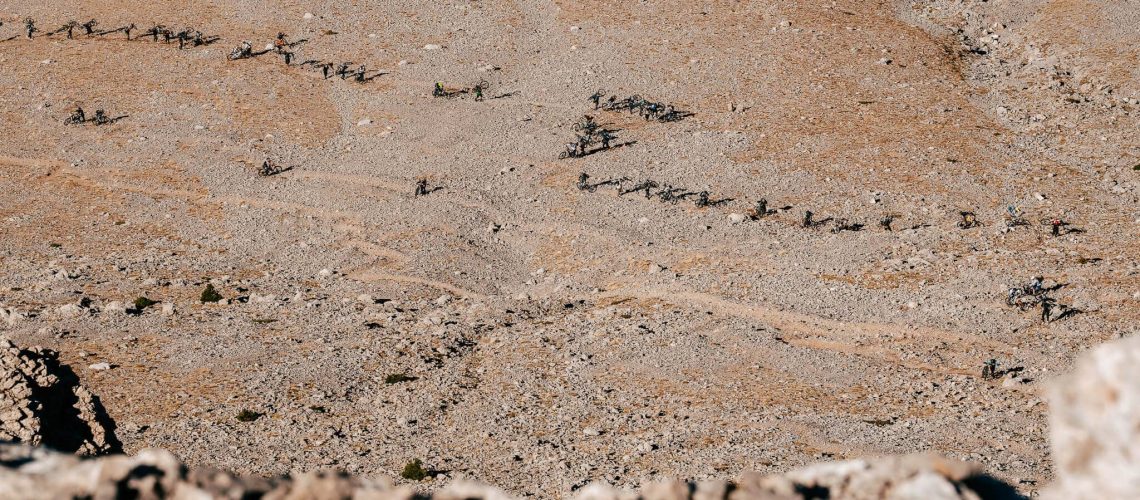
Another, much more recent example is Turbón. Last year, the Puro Pirineo team worked alongside TransNomad to prepare one of the routes we had in mind for the project: the Integral del Turbón.
It’s an incredible route — and a seriously tough one. It gave us some amazing images during TransNomad and, since then, it’s been getting a great response from riders coming to experience it for themselves.
For someone who has already ridden Puro Pirineo and thinks they know it well: where would you send them this time?
One of the new sections definitely worth checking out is the upper part of Rabaltrueras. Last year, we redesigned the trail and the feedback from riders has been really positive.
We’ve also put a lot of work into the lower section to make it much more flowing, so right now it’s one of the places we’d recommend to anyone coming back and looking for something new.
And finally: convince a rider to come to Puro Pirineo this autumn.
I’d tell them to change the way they normally approach a ride.
High-mountain routes require a different mindset. Time feels different up here. It’s worth forgetting about the rush for a while, enjoying the whole experience and remembering to look up and take in where you are.
Because riding in the high mountains is a different story altogether.
And luckily, Puro Pirineo knows a thing or two about that.